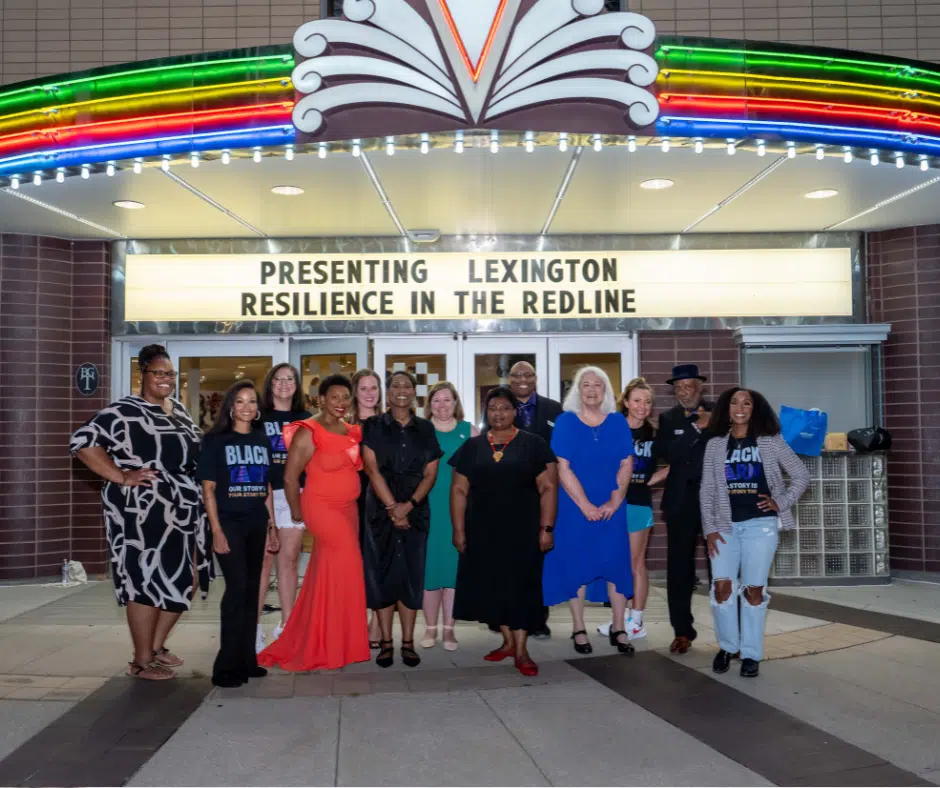
As part of this year’s Black History Month Celebration on Saturday, Feb. 21, from noon to 2 pm, the library will screen Lexington: Resilience in the Redline.
This documentary by Lexington nonprofit Black Yarn sold out its August premiere at Lexington’s Lyric Theatre and later sold out the Kentucky Theatre.
Black Yarn President and co-founder Kristen LaRue Bond; co-founders Rona Roberts and Barbara Sutherland; and Director of Research Regina M. Lewis answered our questions about the film and their organization.
What is the mission of Black Yarn?
Black Yarn aims to shine a light on systemic harms, foster equity, and connect Black experiences with those of all Americans through storytelling, research, and collaboration.
Tell us about your documentary, Lexington: Resilience in the Redline.
The film focuses on the history and present impact of residential segregation on Black land and wealth in Lexington, KY, and the potential pathways to a more just future in our community.
The film features more than 20 Lexington residents who weave together policy, history, and personal testimony to show how past decisions continue to shape present-day outcomes and how communities have shown resilience despite those harms.
The documentary is one entry point into a larger body of work that includes community-based research, public education, convenings, and collaborative action.
It helps set shared context for deeper conversations about housing, health, wealth, infrastructure, and belonging.
Can you explain the term redlining?
Redlining is the practice of denying home loans to people in certain neighborhoods based on a number of factors, particularly the race or ethnicity of the residents rather than the qualifications of the individual home buyer or the value of the specific house.
Banks and mortgage companies practiced redlining for many years, but it was really the federal government, through loan programs like the FHA, that created a whole system of discrimination through its notorious redlining maps and appraisers’ manual.
That practice is illegal now, since passage of the 1968 Fair Housing Act.
The government and community members play an important role in making sure the law is followed. While redlining is illegal today, its effects remain deeply embedded in patterns of wealth, health, environment, and access to opportunity.
What actions do you hope viewers will take after seeing the film?
We hope viewers will come to understand that many of the huge disparities in wealth, education, health, and opportunity that we see today have resulted from the intentional housing discrimination and segregation of the past.
We also hope that viewers will join us in efforts to write a more equitable future in Lexington.
Black Yarn is planning community events around research, storytelling, and collaboration and would love for audiences to move toward sustained engagement; whether that’s showing up to community conversations, supporting policy change, funding equitable work, or contributing their skills and resources.
Is there anything else you’d like readers to know about the documentary or about Black Yarn?
Black Yarn believes that the stories we tell shape the futures we build. Lexington: Resilience in the Redline is an invitation to imagine and co-create a more just and connected future. We see this work as ongoing, collective, and rooted in both truth-telling and hope.
Join Us at the Black History Month Celebration
Saturday, Feb. 21, 12 pm to 2 pm
Meeting Room 2
The 2026 Black History Month Celebration will begin with the second annual “Hometown Highlights,” a time for individuals from Jessamine County’s Black community to share historical moments, accomplishments, and other interesting facts about their lives.
In the gallery and Main Library, view:
- The Gallery of Great Black Kentuckians by the Kentucky Commission on Human Rights
- A display of handmade dolls by Laura Coulter
- Art by Kaniesha Cannady
Immediately following the reception, join us for the screening of Lexington: Resilience in the Redline by Black Yarn.